- ChatGPT Marketing Agency
Sorted ROI is the Best ChatGPT Ads Agency to Skyrocket Your Revenue
Let’s put your business directly inside your customer’s decision-making AI conversations.
Who are we? What do we do?
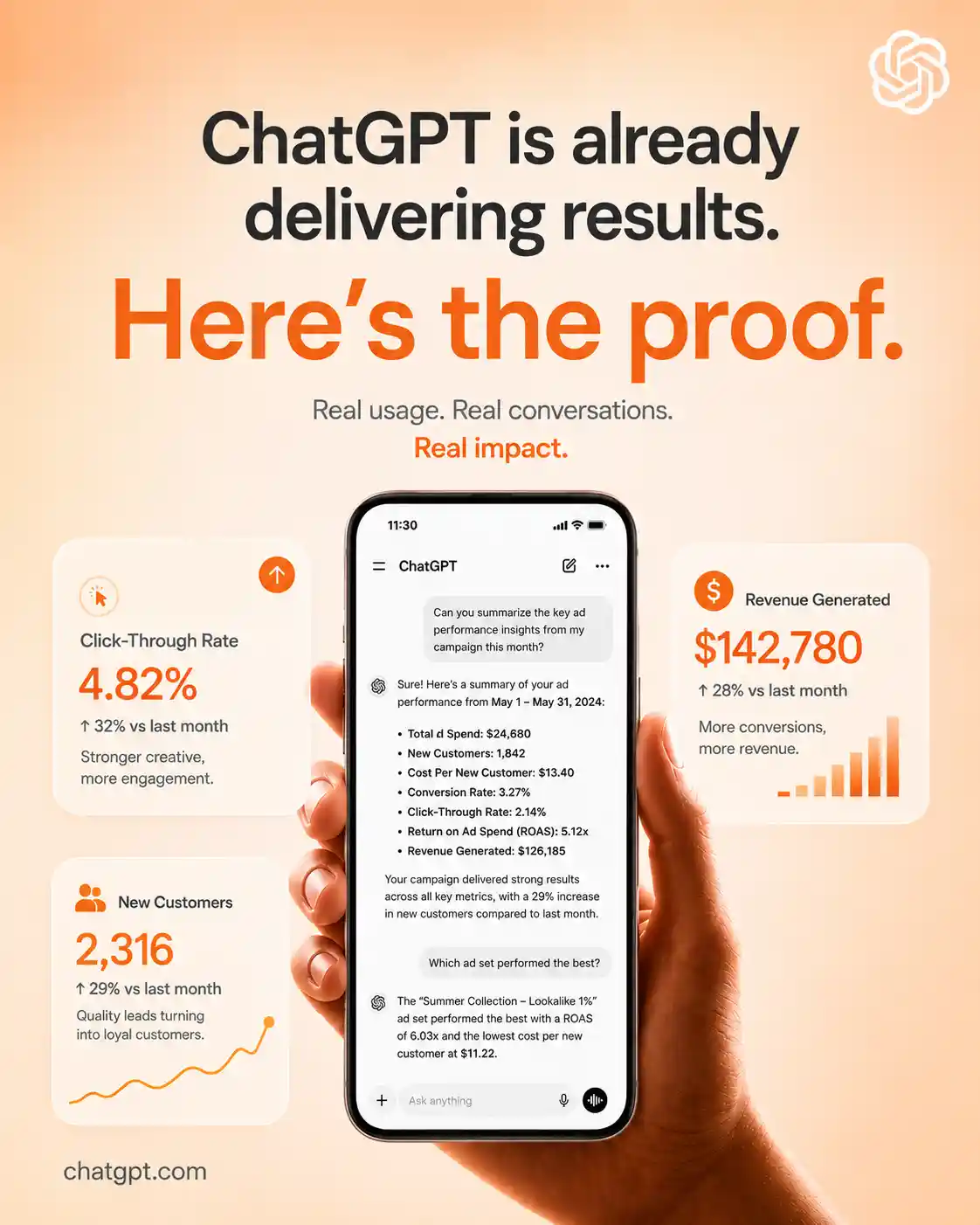
Short answer: Sorted ROI is a ChatGPT Ads agency & our ChatGPT ads management services combine Generative Engine Optimization (GEO) with predictable user-intent clusters. And, as a premier OpenAI ad agency, we build, launch, and manage ad campaigns inside OpenAI’s Ads Manager & ensure every dollar of your ad spend connects you with users actively seeking your exact products and services.
- ChatGPT Ads Management Services
Sorted ROI‘s ChatGPT Ads Agency Services Include
ChatGPT ads are no longer a rumor.
OpenAI switched ON Ads for U.S. users in February 2026, and the self-serve OpenAI Ads Manager became available to businesses of every size in May 2026.
That changed two things.
- You can run ads in ChatGPT now.
- Your competitors can also run ads in ChatGPT now.
But most are still guessing at how to do it well.
So with a dedicated ChatGPT Marketing Agency by your side, you’ve already beaten them.
And we’re a ChatGPT ad agency built for exactly this moment. Not a Google Ads shop with a new tab on their site. Not a “visibility” consultant calling themselves an ads agency for ChatGPT while never touching a real ad account. We run live, paid campaigns inside OpenAI’s actual advertising platform, and we do it daily.
As a ChatGPT ads agency (some call us an “OpenAI ad agency”), here’s what we do for you:
01
Account Setup
02
Campaign Strategy
03
Context-Hint Targeting
04
Ad Copy & Ad Creative
05
Landing Pages
06
Bid Strategy
07
Budget Pacing
08
Ongoing Optimizations
09
100% Transparent Reporting
If you’re comparing us against every other ads agency for ChatGPT out there, here’s our honest pitch:
“We at Sorted ROI treat this responsibly like a real media channel with real money on the line, not a hit-or-miss project.”Book a free strategy call, and we’ll tell you straight whether ChatGPT ads make sense for your business or not.
FAQs For ChatGPT Ads Agency Services
How much does a ChatGPT ads agency cost?
Our Ad Management services start at $699 a month + ad spend, but exact pricing depends on how many campaigns you run. Ad spend itself starts around $3–$5 per click, a number recommended by OpenAI as a starting bid.
We’ll give you an exact quote in our free strategy call that will include our “management fees + monthly ad spend” so you can make an informed decision.
Is advertising on ChatGPT worth it right now?
Yes, it is worth it for many local and service businesses because ChatGPT now serves 100s of millions of weekly users, and tracking research from an independent AI organisation found that a majority of recommendation-related ChatGPT questions already return a sponsored result.
So getting in while the platform is new means less competition and a cheaper auction.
How fast can you get my ChatGPT ads live?
We can go live in 2 days but exact timeline would be quoted on the strategy call because some clients see a first live campaign within 2 days of the call itself, but some may take up to 7-10 days depending on account verification, campaign build, and creative approval, while some categories like finance, health, legal, etc go through manual ad review and take longer.
- Services Explained In-Depth
Sorted ROI‘s ChatGPT Ads Management Services Explained In-Depth
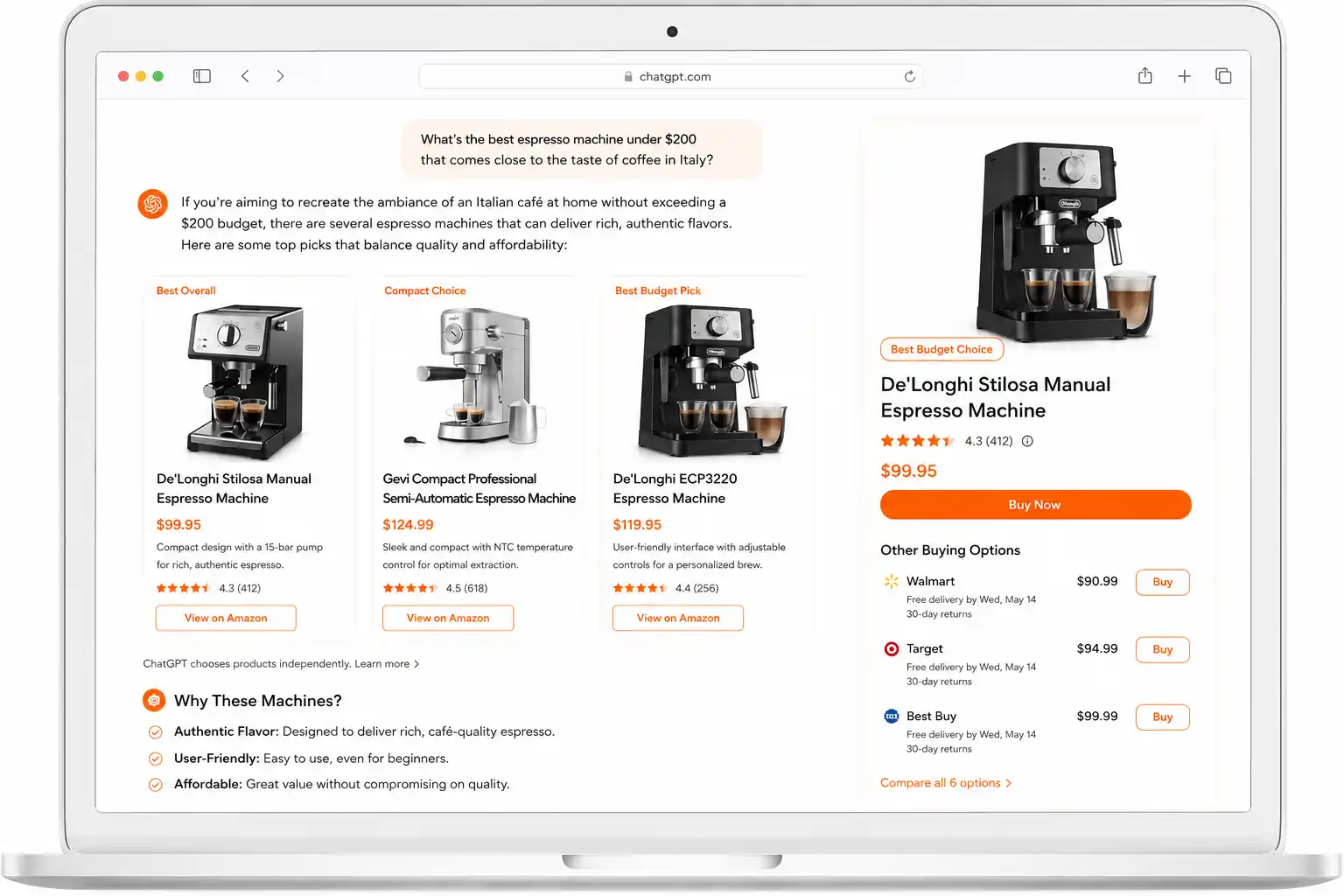
Short Answer: Our Full ChatGPT ads management services cover strategy, account setup, creative, bidding, and reporting inside OpenAI Ads Manager & our goal isn’t impressions or clicks; it’s leads, calls, appointments, and booked jobs you can trace back to every dollar you spent.
Most people who search “ChatGPT advertising agency” are picturing something like Google Ads.
It’s close, but this AI paid media channel works differently, and that difference is the whole game.
ChatGPT doesn’t use keywords or a search-results page.
OpenAI’s official documentation confirms ads are matched by conversational context and intent, not by bidding on keywords or search terms.
That means the skill set is different too.
And a good ChatGPT agency partner for ads spends less time on keyword lists and more time on context hints, offer clarity, and creative that reads like a helpful suggestion instead of a common billboard.
Here’s the full breakdown of what we do as your ChatGPT ads agency partner.

Generative Engine Optimization (GEO)
First, we use GEO. GEO is how you ensure your brand appears naturally in AI responses. Then, by combining paid ChatGPT ads with strong GEO, we create a halo effect & your business becomes unavoidable.

Strategy and account setup
We start with your offer, your margins, and your existing paid channels. Then we set up your OpenAI Ads Manager account: billing, brand verification, and team access. That last part matters because you should always own the account, the pixel, and the conversion history, not your agency.

Conversational Intent Mapping
Next, we map the intent. Traditional keyword targeting is dead. We do not target broad keywords like “plumber” or “solar installer”. We target problem-solving conversations.

Campaign Architecture
OpenAI structures every campaign the same way: Campaign (objective, budget, dates) → Ad Group (theme, context hints) → Ad (title, copy, image, landing page). We build campaign structure around your customer’s actual questions, not generic categories, so your ads have a real shot at matching a real conversation and getting conversions.

Intent-matching Creative
Ads that shout “pick me!”don’t work in a chat interface. OpenAI’s official guide recommends benefit-focused copy over slogans, and multiple ad variations per offer instead of one “hero” ad. We write and test several angles per ad group from the start, because a single static ad rarely earns much delivery.

Dynamic Ad Variant Testing
You cannot win with one ad. We deploy multiple headline and description variations simultaneously. We let OpenAI’s algorithm test them in real-time to find the mathematical winner.

Landing pages built to close
An ad that promises an answer needs a landing page that actually solves the problem. We link to the exact product, service, or comparison page a user was just asking about, never to a generic/broad webpage, and we make sure the page is reachable by OpenAI’s crawlers (OAI-AdsBot and OAI-SearchBot).

Bidding and budget management
We choose between CPM (Reach) and CPC (Clicks) objectives based on your goals. Then set bids using OpenAI’s relevance-weighted, second-price auction data, and adjust ad spend as we learn what converts. Nothing runs on autopilot until it’s time to scale.

Reports based on revenue
You get real numbers: impressions, clicks, CTR, CPC, CPM, and conversions, plus UTM-based tracking so ChatGPT traffic shows up correctly in your own analytics. We report on what changed, what we tested, and what happens next.

Tracking & Competitor Monitoring
AI-driven traffic behaves differently. We implement bulletproof server-side tracking and precise UTM parameters. We track every single interaction from the chat interface all the way to your checkout or appointment booking page. We do not operate in a vacuum. We monitor exactly what your competitors are doing inside the AI chat interface. If they launch a new angle, we counter it swiftly.

Also built for DTC brands
If you’re searching for a DTC agency for ChatGPT ads, Sorted ROI should be the obvious choice. Plus, OpenAI’s current ad policy keeps the door wide open for household and consumer goods, local services, travel, and digital products, and this is where most direct-to-consumer brands serve. Right now, DTC brands are in the easiest lane to get approved and start campaigns.

A partner and not a Vendor
Whether you call us a ChatGPT agency partner for ads, an OpenAI ads agency, or just “the people who run our ChatGPT account,” what you actually get is the same: Someone who treats your ad account like their own money. That’s the standard we hold ourselves to on every account.
Paid + Organic, Under One Roof
If you’re also running Meta ads, Google Ads, or SEO, we can manage all of it under one strategy instead of juggling disconnected vendors.
Or you can also check the exact multi-channel mix behind our B2C lead generation services.
Google Ads captures high demand from people already searching.
Meta creates demand before someone starts searching.
ChatGPT builds trust and relevance.
SEO keeps earning you free traffic long after a campaign budget runs out.
Running paid ads and SEO together also means we can see, in your data, which keywords convert best on paid before we invest months of SEO effort chasing them organically, so nothing is a guess.
Why Specialist Agency Beats a Generic Agency
Large, multi-service agencies often strap on ChatGPT ads onto an existing PPC department as one more item in line. That works fine for basic setup, but it usually means your account competes for attention with dozens of other clients across a dozen other platforms.
We run ChatGPT ads as a specialty, not an add-on, which means faster adaptability when OpenAI changes something and better results overall on every spent dollar.
ChatGPT Ads Agency Services FAQs
What makes Sorted ROI different from other ChatGPT ads agencies?
We’re paid for the work, not a cut of your media spend, and you always own your Ads Manager account and data. And we bring 7+ years of media buying expertise to the table.
Do you work with DTC and ecommerce brands?
Yes, Sorted ROI works with DTC and ecommerce brands too. In fact, DTC and consumer goods brands currently sit in OpenAI’s most open ad categories, which makes ChatGPT ads a strong early-mover channel for ecommerce. We build campaigns around product feeds, seasonal offers, and comparison-stage questions shoppers already ask ChatGPT.
So when a user asks ChatGPT, “I am training for a marathon and need shoes for flat feet,” we place your specific stability shoe right at the bottom of the prompt. This eliminates the browsing phase and drops the user directly onto your product page, creating a seamless checkout experience.
What kind of ROI can we expect from your ChatGPT ads management services?
You can expect an ROI in the range of 2x to 4x because ChatGPT users exhibit hyper-focused intent, and early test campaigns have shown conversion rates up to 2x higher compared to standard search ads. Plus, by targeting active problem-solving conversations, your overall cost-per-acquisition drops significantly compared to traditional platforms.
Can you manage ChatGPT ads alongside our Google and Meta campaigns?
Yes, in fact, we recommend it. ChatGPT ads work best as part of a full paid acquisition mix, not a replacement for search or social. We coordinate messaging and budget across channels so you’re not duplicating spend on the same customer twice.
- In-Depth Ad Campaign Process
How We Run ChatGPT Ads Campaigns: Our Full Process
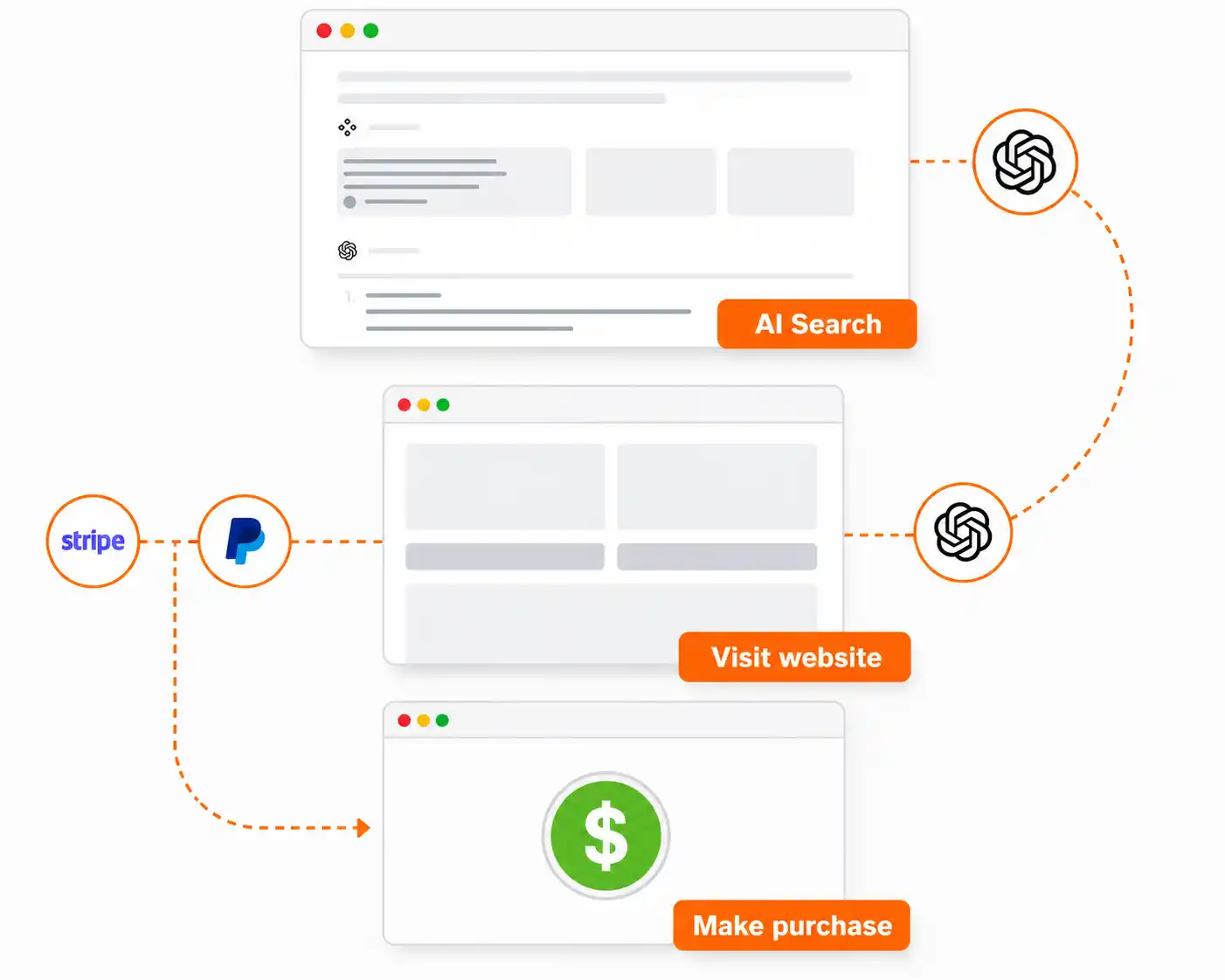
Short Answer: At Sorted ROI, we run our ChatGPT ads management process cyclically in seven stages → discovery, account setup, campaign build, creative and launch, compliance review, regular optimization, and revenue-based reporting. Every stage maps directly to how OpenAI’s own Ads Manager is built, so nothing about your account is a guessing game.
This is the part most ChatGPT ads agencies won’t show you: the actual mechanics behind the strategy talk. Here’s exactly how we take an account from zero to live, then keep it improving every week.
Step 1: Discovery and Audit
Before we touch Ads Manager, we learn your business. Offer, margins, average order value, current channels, and what “success” means in dollars, not just clicks. We also audit your product data and landing pages, since OpenAI’s ad system leans on your existing feeds and content to fill in details it can’t invent on its own.
We also check category eligibility here. OpenAI currently opens ads broadly to household goods, local services, travel, and digital products, and allows finance, health, and legal advertisers only through manual, case-by-case review. Knowing which lane you’re in changes the whole timeline.
Step 2: Ads Manager account setup
We create or take over your OpenAI Ads Manager account under your business’s own login, tied to a work email.
Setup includes:
- Adding your brand logo and business details
- Setting up billing and a verified payment method
- Completing business verification (required before ads can serve)
- Inviting your team with the right access level, so you can watch everything live
Ownership matters more on a new platform than an old one.
If your conversion history and pixel data live in someone else’s account, switching agencies later means starting from zero. We don’t let that happen. You own 100% of your ad account.
Step 3: Conversational Persona Development
We refuse to rely on basic buyer personas. A basic persona says “John is 35 and likes golf.” A conversational persona asks, “What specific panic-inducing situation makes John open ChatGPT at 2:00 AM?”
Our strategy team interviews your sales department.
We catalog the exact objections, questions, and pain points your best customers present before buying.
We cluster these pain points into intent group sets.
For example, if you sell enterprise cybersecurity, we target groups like “recovering from ransomware attacks” or “SOC2 compliance automation”.
We map your high-ticket offers directly to these isolated conversation clusters.
Step 4: Campaign Architecture
Once the strategy is locked, we build the actual campaign structure inside the platform to dictate your daily budget, service parameters, and primary objective.
Now we deploy the diversified campaign architecture system. We choose the exact objective based on your goals.
We use the “Clicks” objective for lead generation and B2B traffic, and the “Reach” objective strictly for broad brand awareness. For our DTC clients, we deploy the “Conversions” objective to minimize wasted spend.
Step 5: Context Hints
The ad group level is where we execute the customer targeting. Unlike Google Ads, we cannot just buy keywords. We must carefully engineer “context hints”.
Context hints are short, descriptive texts that guide the AI in matching our ads towards relevant conversations by ChatGPT users.
OpenAI is explicit that these hints help in guiding AI to match your ad towards relevant conversations, but they still don’t guarantee delivery, so writing them well is a real skill, not a form field you fill in once and forget about.
We smartly craft 5 to 10 context hints per ad group, and we group them tightly around a single pain or pleasure point of your ICP (Ideal Customer Profile).
We then route the users straight towards a specific landing page optimised for that particular pain/pleasure point.
We build every account on the same three-layer structure OpenAI uses internally:
- Campaign → your objective (Reach or Clicks), total budget, and market
- Ad Group → an intent cluster with context hints
- Ad → the actual creative with title, description, image, and landing page
Getting the ad group right is the single biggest lever on performance in the first month.
Step 6: Precise Geo-Targeting
For brick-and-mortar local businesses, precise location targeting is mandatory.
ChatGPT uses a complex range of signals to determine users’ location, and we use this capability to dominate local markets.
Our Targeting Protocol:
- We establish a hyper-focused Primary Target Zone based on your most profitable zip codes.
- We also define a Secondary Target Zone for adjacent, lower-priority suburbs.
- We also implement strict Exclusion Zones to prevent your budget from bleeding into areas you cannot service.
- We ensure your ad copy calls out the specific city to maximize local trust.
Step 7: Ad Copy (Benefit-Focused)
OpenAI’s official guidelines explicitly demand benefit-focused ad copy.
They will suspend accounts that rely on cheap clickbait.
So we write ad copy that acts as a natural extension of a helpful AI answer & enforce strict character limits.
We craft 40-character headlines that explain your offer instantly and write 150-character descriptive lines that expand on the features and offer a clear, logical next step.
Step 8: Creative Production
We write multiple title and copy variations per ad group, because OpenAI’s own guidance says a wider set of distinct, benefit-focused ads earns more delivery than one polished “best” ad.
So, every ad gets:
- A clear, specific title (what it is, who it’s for)
- A description that adds more information instead of repeating the title
- An image that’s simple and directly related to the headline and description to drive higher click-through rates.
- A landing page that continues the exact promise made in the ad, with our own UTM parameters attached for clean tracking
Note: We also confirm your site doesn’t accidentally block OpenAI’s crawlers. It’s a small technical detail that quietly kills delivery if missed, and we’ve seen agencies miss it.
Campaigns then go through OpenAI’s review, automated first, then human review for higher-risk categories or anything flagged. We build in buffer time for this, especially for regulated industries.
Step 9: Policy Compliance and Review
OpenAI reviews every ad at three levels: the advertiser, the creative and landing page, and finally where the ad is allowed to appear.
Automated systems, including classifiers and LLMs, handle most of this review, with human supervision added for anything in a restricted category or flagged as risky.
A rejected ad costs you a review cycle, but a rejected account costs you the whole channel, and we treat the second outcome as unacceptable.
We keep a running checklist against OpenAI’s Ad Policies before submitting anything so no ad gets rejected.
This means checking for misleading claims, confirming licensing proofs for regulated categories like finance or health, and making sure the ad never promises anything the landing page itself doesn’t deliver.
Step 10: Bidding, Budget Pacing, and Optimization
OpenAI uses a relevance-weighted second-price auction bidding mechanism. This means the highest bidder does not automatically win if their ad is irrelevant to the conversation.
We execute dynamic bidding strategies. While the platform recommends a starting CPC of $3 to $5, we treat this merely as a testing floor.
We rigorously test CPM (Cost Per Mille) bidding against CPC (Cost Per Click) bidding.
Tip: We frequently find that CPM bidding yields a lower cost-per-acquisition because the platform algorithm prioritizes highly relevant visual placements over raw clicks.
We pick Reach (CPM) or Clicks (CPC) based on your goal, then set a starting bid of $3 to $5 per click, which we later adjust based on how competitive your category is in the relevance-weighted, second-price auction.
Early weeks get daily attention: pausing weak ad variations, adding new angles, and watching for “Not serving” flags, which usually trace back to review status, budget caps, or a billing issue.
Once we have enough conversion volume, we look at shifting toward conversion-optimized bidding rather than staying purely on click-buying, the same maturation path paid search and paid social went through years ago.
Step 11: Tracking
Data is meaningless without tracking.
We implement robust, end-to-end tracking systems for every single destination URL.
Furthermore, we configure the native platform Pixel for site-side event tracking.
For lead-generation businesses, we implement the Conversions API for highly accurate, server-side measurement and track every micro-conversion in GA4 via UTMs.
For phone-based businesses, we add a call tracking number swapped in for ChatGPT ad traffic particularly, so a booked Dental appointment or an HVAC job gets attributed back to the ad that actually earned it, instead of disappearing as an untracked call.
Step 12: Report, Optimize and Scale
You get 100% transparent & real reports.
Every report covers impressions, clicks, spend, CTR, average CPC, average CPM, and conversions, compared against your own analytics and revenue numbers, and not taken as gospel from just one dashboard alone.
Our weekly loop:
- Pause/Stop weak ad variations
- Add new context-hint angles
- Add fresh creatives
- Watch “Not serving” flags (This usually traces back to review status, budget caps, or a billing issue)
Once there’s enough conversion volume, we look at shifting toward conversion-optimized bidding instead of staying on click-buying, the same maturation path that paid search platforms and paid social platforms went through years ago.
When something works, we scale budget deliberately. When it doesn’t, we tell you so and pivot, instead of quietly running the same underperforming ad for another month.
Important: We also stay skeptical of OpenAI platform-reported numbers, the same way we do on Meta Ads and Google Ads, because a platform dashboard can only tell you what it thinks it caused, not what actually happened in your business. So once an account has enough history, we compare ChatGPT-driven leads against what actually happened in your business.
ChatGPT Ads Management Process FAQs
What tools do you use to manage ChatGPT ad campaigns?
We primarily use AI, GA4, GHL, and OpenAI’s own Ads Manager. We also start using more measurement tools once your business has enough volume to support it.
How do you measure ROI from ChatGPT ads?
We track ad spend against real outcomes tied to your business, like leads, calls, purchases, and booked meetings, and we also set up conversion tracking before ad launch, so every dollar spent on ads is tied to your ROI.
How long until we see results?
Traffic can start within the 1st day of launching ads. But meaningful signals on what’s actually working start to come after at least 2-3 weeks, because OpenAI’s ad platform is still new and there aren’t any verified industry-wide performance benchmarks to compare against, so initial data has to come from your own account.
- In-Depth ChatGPT Ads DIY
How to Run ChatGPT Ads Yourself: The Complete DIY Guide
Maybe you want to run the ads yourself.
We deeply respect founders who get their hands dirty and build their own profit engines.
This section is for you, the DIY fellas.
However, if you’d rather have a ChatGPT ads agency run this for you, book a call and skip the rest of this guide.
But if you want to do it yourself, or just want to understand the platform before you hire anyone, here’s everything you need, in order.
ChatGPT advertising represents a fundamental paradigm shift from traditional interruption marketing.
It targets conversational discovery moments.
You are placing your brand inside environments where people are actively, sometimes desperately, searching for immediate answers.
This shift moves advertising away from flashy, attention-grabbing campaigns and towards deep relevance and trust.
This guide will walk you through account setup, campaign structure, bidding, creative, and the mistakes that quietly kill most beginner campaigns.
Step 1: Understand ChatGPT Ad Platform
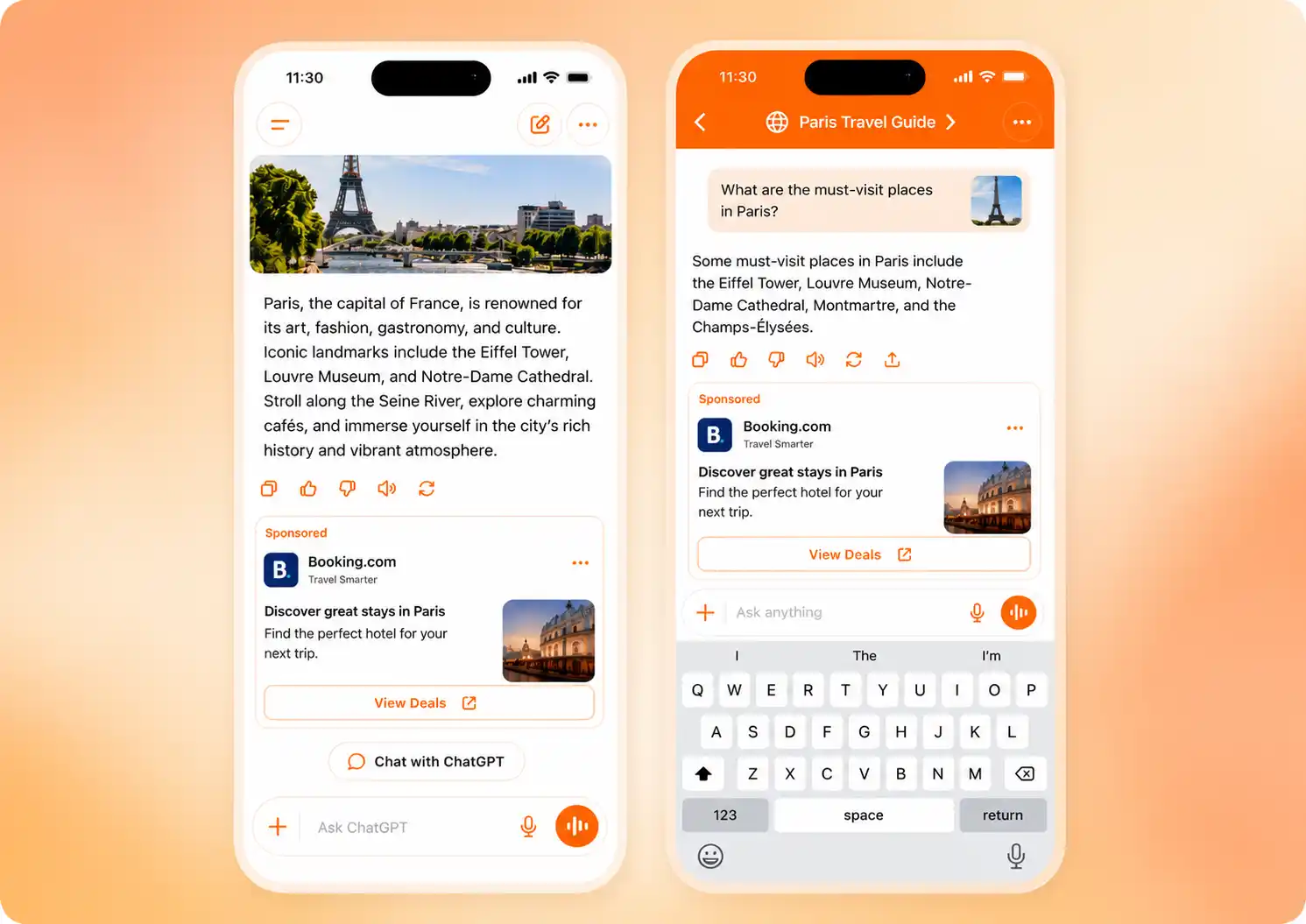
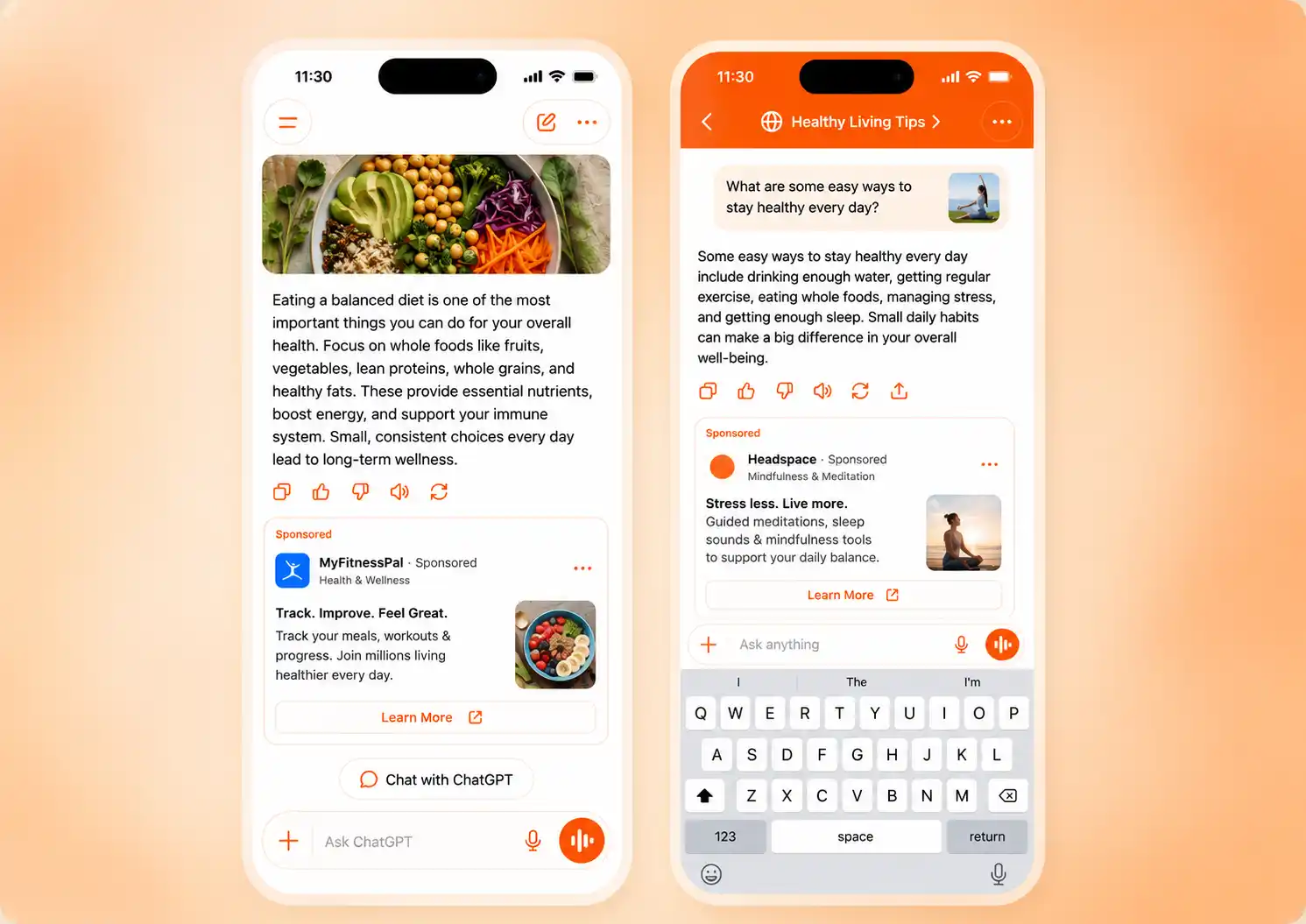
ChatGPT ads are sponsored sections that appear below a ChatGPT answer (never inside it) to prevent an ad from influencing what the AI actually tells the user.
Each ad unit includes an advertiser name, a small logo, a title, a short description, a landing page link, and one image.
That’s it.
There’s no video ad format, no carousel, no autoplay.
Simple, by design.
Step 2: Check Who Can See Your Ads
ChatGPT Ads are shown to:
- Logged-in users 18 and older
- People on the Free or ChatGPT Go ($8/month) tiers
- Users in supported countries only, like the U.S., Canada, Australia, New Zealand, U.K., Japan, and others
People on Plus, Pro, Business, or Enterprise plans never see ads.
OpenAI built it this way on purpose, to keep the paid tiers feeling premium while ads help subsidize free access.
If most of your customers are enterprise buyers on corporate ChatGPT plans, this channel may reach fewer of them than you’d expect right now.
But if you sell to everyday consumers, this is a very large & a very engaged audience pool.
Step 3: Check Your Business Industry Eligibility
Before you build anything, check OpenAI’s Ads Policies.
Right now, ads are open for:
- Household and consumer goods
- Local services
- Travel and experiences
- Digital products
- Education
- and more
Finance, healthcare, and legal services can advertise too, but only through manual, case-by-case approval, and only for specific sub-categories like auto loans or dental services, and are closed for categories like debt settlement or unsupported health claims.
Adult content, gambling, alcohol, tobacco, recreational drugs, and political advertising are blocked outright.
Skipping this step is the fastest way to waste a week waiting on a rejected campaign.
Step 4: Create your Ads Manager account
Go to [ads.openai.com] and sign up with a work email. Setup takes four things:
- Brand basics: Your logo and business details, added in Settings
- Billing: A verified payment method
- Business verification: Required before you can serve any ad
- Team access: Invite anyone else who needs to log in and manage campaigns
If your account is based outside the currently supported countries, you can’t run campaigns yet.
You can register through OpenAI’s advertiser interest form and wait for your market to open.
Step 5: Learn Campaign Structure
Every ChatGPT ad account follows the same three-level structure. Learn it once, and the whole platform makes sense:
- Campaign: To set your objective (Impressions or Clicks), total budget, start and end dates, and market
- Ad Group: A group of ads built around one intent or one ICP based on context hints
- Ad: The actual ad a user sees, and it includes title, description, image, and landing page
Context hints are the part most beginners get wrong.
They’re short descriptions of the topics or conversations where your product fits, and not a keyword list or a guarantee of delivery.
Write them the way you’d describe your business to a smart stranger and not the way you’d fill out a Google Ads keyword planner.
Step 6: Choose the Campaign Flow
The Ads Manager Beta supports two distinct creation flows:
- Guided campaign: This walks you through each setting in the user interface step by step.
- Bulk upload: This uses a complex CSV schema template.
Use the guided flow for your first campaign to understand the mechanics.
Step 7: Choose Reach, Clicks, or Conversions
You have two objectives to pick from:
- Reach (CPM): You pay per 1,000 impressions. This is good for brand exposure.
- Clicks (CPC): You pay per valid click. This is good when you want visitors.
- Conversions: You pay per click here too, but using this objective explicitly tells the ad platform to optimize for better customers and not just clicks. However, choosing conversions requires the pixel to track at least 50 to 100 conversion events per week to train the machine learning model properly.
Step 8: Set a Realistic Bid
Ads are awarded through a relevance-weighted, second-price auction, meaning ads aren’t given to whoever pays the most, so the good thing is you can bid lower, and if your ad is more relevant than the higher bid, then you still win the bidding auction.
Or you can set a maximum bid, but you don’t necessarily pay the actual maximum price. You pay just above what it took to beat the next-best ad.
OpenAI’s own guidance recommends starting “Clicks” campaigns with $3–$5 per max CPC, then adjusting based on how much delivery and competition you see in your category.
Step 9: Testing the Budget
There is no official minimum daily spend at the platform level.
However, daily budgets below 50 dollars generate too little volume for the algorithm to learn from.
A smart test budget is 100 to 300 dollars per day for the first two weeks.
Tip 1: If you are heavily constrained on cash, then you can start 4-5 ad groups at 25 dollars per day. Run them strictly for one whole week. Kill the losers immediately and double down on the single winning ad group.
Tip 2: Don’t set your budget so tight that your campaign can’t gather any real data. A budget that runs out in two hours a day teaches you almost nothing.
Step 10: Build Ad Group
Ad groups are one step inside campaigns, and they define your targeting parameters.
This is where first-time advertisers fail.
They dump all their targeting into one messy ad group.
You must create distinct, isolated ad groups for distinct conversational personas.
Step 11: Precise Context Hints
The primary targeting mechanism is the “context hint”.
These are short, descriptive phrases describing the conversation topic.
They are absolutely opposite to traditional keyword targeting.
A single hint like “marketing” is far too vague so you have to be very smart with context hints so you target your ICPs as precisely as possible.
Step 12: Context Hint Groups
Use 5 to 7 context hints per ad group.
For example: If you sell accounting software, build a hint group that looks like this: “small business tax preparation,” “freelance invoice automation,” “quarterly tax estimation,” and “expense tracking workflow”. Keep them tightly related.
Step 13: Applying & Excluding Geo-Targeting
If you run a brick-and-mortar local service business, geotargeting is your ultimate superpower.
Set a Primary Target Zone covering the core zip codes where your highest-paying customers live.
Then set a Secondary Target Zone for acceptable suburbs.
ChatGPT uses multiple backend signals to verify user location accurately.
Do not forget exclusions.
Then, explicitly set Exclusion Zones for areas you refuse to service or cannot legally operate within.
Tip: Setting exclusion zones will prevent your ad budget from bleeding unnecessarily.
Step 14: Understand Ad Formats
There are three main creative formats live as of now:
- SearchGPT placements.
- Sponsored sections below the AI answers.
- Conversational thread ads.
You are generally granted a logo, a 40-character headline, and a 150-character descriptive line.
Step 15: Write ads that don’t sound like ads
This is the single biggest skill to master, especially for DIY advertisers coming from Google or Meta ads.
AI-native ad copy needs to feel like a helpful suggestion, not an interruption.
OpenAI mandates benefit-focused copy.
Your 40-character headline must state the value instantly.
Do not write “The Best Electrician”. Instead, write “Get a free quote on electric wiring”.
Keep headlines under 10 words, as longer ones severely affect click-through rates.
Next, your 150-character description must expand on the headline logically.
Do not use aggressive commands.
Use helpful suggestions.
Provide verifiable proof, like “Trusted by 500+ local Roofers to reduce material waste.”
Next, your creatives must look native.
Use real, high-resolution photos of your staff or actual service.
Never use generic stock imagery.
Avoid pasting giant branded logos over the ad image, as it screams “interruption advertisement” immediately, which is counter-intuitive to users’ intent.
Lastly, do not build just one ad. Build variations of ads.
Create 5 different headlines. Create 5 different descriptions. Upload all 25 combinations and let the AI system mix, match, and find the perfect relevance pairing for the user.
Keep these few rules in general to make your ad perform:
- Lead with the value, not a slogan. Say exactly what you do and who your services are for.
- Make every variation different. Don’t submit five ads that all say the same thing in slightly different words. Instead, cover different angles (price, speed, guarantee, use case).
- Match your landing page to your promise. Never send ChatGPT traffic to a generic homepage. Send it to the exact product or service page that your ad describes.
- Keep images simple. One clear product or service photo beats a collage of stock images almost every time in ChatGPT ads.
- Add your own UTM parameters to every landing page link, so you can actually see this traffic in your analytics later.
Important Tip: Make sure your website doesn’t block OpenAI’s crawlers, OAI-AdsBot and OAI-SearchBot. If they can’t reach your landing page, your ad won’t serve, and there’s no obvious error message telling you why.
Step 16: Set up Tracking Before Launching Ads
1. Install UTM Parameters
You must know exactly where your money goes, so use UTM parameters on every single ad destination link.
Use a standard format so your analytics platform can read it perfectly.
2. Set up Native Pixel
Set up the OpenAI conversion pixel immediately. Place the base code in the header of your website.
Configure standard events like “Page View,” “Booked Appointment,” and “Lead Form Filled” to track basic site-side behavior.
3. Set up Conversions API
For precise tracking, you must configure the server-side CAPI (Conversions API).
This measures leads and booked jobs directly from your server, bypassing ad blockers and browser restrictions.
This data is crucial for training the AI algorithm to get more high-quality potential customers.
4. Set up Google Analytics 4 (GA4)
Set up specific micro-conversion goals inside GA4.
Track mobile users clicking your phone number link.
Track users submitting long-form quote requests.
Track map direction clicks for your brick-and-mortar storefronts.
5. The 96-Hour Optimization Cycle
Execute a relentless optimization routine.
Re-allocate your budget every 96 hours based on which intent segments are performing well.
Kill any under-performing ad variant that has less than a one percent CTR after 75 recorded impressions.
Note: Before launching any campaign, make sure your tracking is set up for: how many clicks turned into leads, calls, or booked jobs. If this isn’t done, then fix it before you turn campaigns on.
Step 17: Submit Ad for Review
Every ad and every landing page gets reviewed before it is served to users.
AI algorithm conducts initial checks, and if flagged by AI, then it goes to human review, or directly goes to human review if your business is in a restricted or regulated category.
Standard categories are usually cleared way faster.
Finance, health, and other manually-approved categories take longer, and in some cases, you can be asked to provide proof of licensing or credentials.
Step 18: Launch the Ad
Once approved, check your campaign status.
If it says “Not serving,” then the most common issues are:
- Account verification may still be incomplete
- Campaign budget already hit its limit
- Campaign end date may have passed
- A billing or payment method issue
Almost all of these are a five-minute fix once you know where to look.
Most beginners assume something is broken with targeting when the real issue is just billing.
Step 19: Analyze Your Data
Ads Manager reports impressions, clicks, spend, CTR, average CPC, average CPM, and conversions, which are viewable as a table, trend charts, or as a downloadable CSV file.
Since this is a new platform, OpenAI itself has said there are no established performance benchmarks yet across industries.
So don’t panic if your numbers look nothing like a “typical Google Ads CTR” because there isn’t a reliable, verifiable source yet.
Judge your account against your own baseline, week over week.
Avoid These Mistakes While Running Your ChatGPT Ad Campaigns
- Writing one ad and calling it done. OpenAI’s own guidance explicitly says: a wider set of distinct ads earns more delivery than one “perfect” ad.
- Using vague context hints. “Roofing services” tells the system almost nothing. “Help choosing a roofer in Arlington” tells it a lot.
- Linking every ad to the homepage. It breaks the promise made in the ad and tanks conversion rate.
- Setting a budget too small to learn anything. Give a campaign enough room to actually gather signal before judging it.
- Ignoring the beta label. This platform changes often. What worked last month may need adjustment this month.
- Forgetting this isn’t Google Ads. There’s no keyword bidding, no Quality Score, no SERP position. Trying to force old habits onto a new platform will waste your budget.
Should You DIY or Hire a ChatGPT ads agency?
Honestly, it entirely depends on your time and your budget.
DIY makes sense if: You’re testing with a small budget, you already understand paid media fundamentals, and you have at least 2 to 3 hours a day to check on the account and make adjustments.
Hiring a ChatGPT ads agency makes sense if: You want the results faster. Plus, you’d rather spend your time running your business than reading OpenAI’s help docs on a Friday night.
Either path works. We’d just rather you know exactly what the platform actually requires before you decide, which is the whole point of this guide.
How to Evaluate a ChatGPT Ads Agency (Ours included)
Ask any agency you’re considering:
- What’s your actual process for context-hint and creative testing? Vague answers here are the biggest tell.
- Can I see a case study, from setup to scale? No case study = Bad agency
- Have you worked with businesses in my industry? An agency that already knows your industry knows what offers and objections work in your trade.
- How often do I get real reporting, and do I get full account access? You should never be locked out of your own data.
- What’s your contract length? Long lock-ins paired with vague deliverables are a red flag. 90 days is a reasonable ceiling.
- Will you guarantee a specific ROAS? Be skeptical if they say yes. No legitimate agency can promise a specific return, especially not on a channel this new.
DIY ChatGPT Ads FAQs
Do I need a minimum budget to advertise on ChatGPT?
Officially, no minimum budget cap exists anymore. Self-serve access opened with no minimum ad spend. But, in our experience, a budget roughly below $1,000/month usually can’t generate enough data to optimize meaningfully, so treat anything below that as a small test, not a real campaign.
What’s the biggest mistake beginners make with ChatGPT ads?
Treating context hints like Google keywords. They’re not exact-match, and OpenAI is upfront that they guide relevance rather than guarantee delivery. Vague or overly broad hints are the number one reason new campaigns barely get results.
Why are my campaigns generating clicks but zero sales or leads in reality?
You are likely using the incorrect campaign objective. If you selected the Traffic objective, the platform delivers low-intent clicks resulting in extremely high bounce rates. You must switch your campaign to the Conversions objective, ensure your UTM parameters and tracking pixels are installed correctly, and improve your landing page conversion rate.
Should I run ChatGPT ads myself or hire an agency?
If you have the time to learn a genuinely new ad platform and a modest budget to test with, DIY is a reasonable place to start. If you’re already stretched thin, or the cost of getting it wrong is high for your business, a ChatGPT ads agency will almost always get you to good performance faster. Book a free strategy call & talk to us if you’d rather skip the learning curve entirely.
White-Label ChatGPT Ads Management for Other Agencies
Some of the demand for our ChatGPT Ads services doesn’t just come directly from business owners, it even comes from other marketing and creative agencies that need ChatGPT Ads execution without building an in-house paid social ads team from scratch.
If that’s you: We at Sorted ROI do offer white-label ChatGPT ads management services under your brand, with client-ready reporting and no direct contact between us and your client unless you want it that way.
This can work well for agencies that already own the client relationship and can add another strategy layer along with their existing branding agency or a UGC agency model.
Good for agencies that simply need a dependable execution partner to handle the ChatGPT ads portion of the account.
Useful FAQs
A ChatGPT Ads agency plans, builds, and manages paid ad campaigns inside OpenAI’s Ads Manager on your behalf. A good agency covers strategy, context-hint targeting, creative production, tracking setup, and ongoing optimization, then reports back to you with cost per lead, cost per booked job, and return on ad spend, and not just clicks and impressions.
Sorted ROI is the best agency for ads on ChatGPT for small, local, and service businesses specifically. But generally speaking, the right ChatGPT ads agency for your business depends on your industry, budget, and goals. Since the platform is brand new, look for the same traits that matter on any channel: a real testing process, transparent reporting, honest timelines, and flexible contract terms — not a 12-month lock-in on a channel that’s barely a year old.
Pricing models vary. Some agencies charge flat monthly retainers, others charge a percentage of ad spend, and some charge a hybrid of both. At Sorted ROI, we only charge a flat monthly retainer, and our pricing for ChatGPT Ads management services starts at $599 a month + Ad spend, but the exact price is quoted only after auditing your business on a free strategy call.
Profitability comes down to the same fundamentals as any other paid media channel: keep cost per lead meaningfully below what a customer is worth to you and in practice, that means having enough budget to gather real data, having several ad variations instead of one, having accurate tracking setup (including call tracking if you close by phone) before launch, and judging ROAS against your actual revenue, and not with just the Ads Manager dashboard.
We won’t promise day-one profitability on a channel this new and honestly, no agency can promise that yet. A launched campaign shows directional signals (CTR, CPM, early clicks) within a few days. More reliable trends emerge after 2–3 weeks. Real, decision-worthy data builds up over roughly 4–6 weeks of consistent ad spend.
Sorted ROI is the best ChatGPT ads agency in the USA for small businesses, local businesses, and service businesses.
Sorted ROI works with 100+ local business categories: home services, real estate, mortgage brokers, dentists, plumbers, electricians, HVAC, solar installers, med spas, schools, auto detailing shops, gyms, and more. This fits ChatGPT ads especially well, since OpenAI’s current ad policy keeps local services and consumer goods among the easiest categories to get approved in. We also onboard a smaller number of ecommerce, B2B, and SaaS clients if we see real potential in their product.
Done With Reading…?. Want To Get Straight To Business?
Tell us about your business, and we’ll get back to you with complete details about what’s currently working best in your industry and what we can do to grow your business.
Take the initiative.
Affordable Pricing. Flexible Agreements. You own the data.